
British Shorthair
British Shorthair kittens, raised in our family home
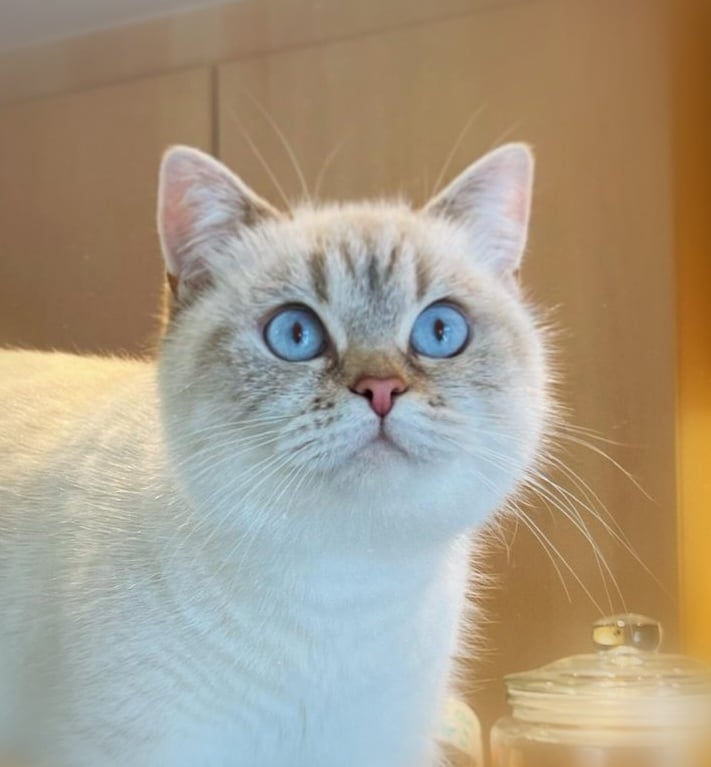
Calm and devoted, the teddy bears of the cat world — Britain’s oldest pedigree breed and a quietly affectionate companion.
About the British Shorthair
The British Shorthair is one of the oldest recognised pedigree cat breeds, with origins traced to Roman cats kept in British homes nearly two thousand years ago. The breed standard prizes a sturdy, “cobby” build, dense plush coat and famously round eyes — the features that give them their teddy-bear silhouette.
In temperament they are calm, undemanding and quietly affectionate. They prefer to be near their people rather than on top of them, though we have had a few who are definitely lap cats too on there terms. They are content to play independently, and tend to greet visitors with curious composure. Their easy-going nature makes them well suited to family homes, including those with children and other pets.
Our British Shorthairs are raised with love in our family home, well-socialised and accustomed to everyday life — sofas, footsteps, gentle handling — so they arrive at their new families confident and at ease. Every parent is GCCF registered and health tested.
At a glance
- Temperament
- Calm, undemanding, quietly affectionate. Independent without being aloof.
- Coat
- Short, dense and plush — often described as feeling like a teddy bear. Minimal grooming.
- Size
- Adults typically 4–7 kg; males larger than females. Slow to mature — full size around three years old.
- Lifespan
- 12–17 years
- Energy
- Moderate — playful as kittens, settled and dignified as adults.
- Vocalness
- Quiet. Communicates with looks more than meows.
- Grooming
- A weekly brush is plenty; no specialist coat work required.
- Time alone
- Tolerates time alone well, especially if a feline companion is present.
- Best for
- Calm households, first-time pedigree owners, families wanting a steady, low-drama companion.
Colours we breed
We breed only colours we can confidently raise to GCCF standard. The list below is drawn from our current and recent litters; the wider list of recognised British Shorthair colours is shown beneath.
Recognised British Shorthair colours
Current & upcoming litters
All available kittens- WeaningBorn 8 April 2026
Chiisana - IvyBlue Asia × sire to confirm
Chocolate Golden Tipped
FelisMagicae Tsukiko - Female - Black golden Tipped Tabby - Our little teddy-bear, Playful & cuddly, FelisMagicae Yukiko - Female - Blue golden Shaded - Confident, inquisitive, independent FelisMagicae Taiyo - Male - Blue Golden Tipped - Affectionate, clam, gently playful
Our British Shorthair queens
British Shorthair kittens across the UK
We deliver to families across the UK from our home in Sherborne, Dorset. Visiting in person, video viewings and approved-courier transport are all options - pick a region for travel notes specific to you.
Health testing & ethics
Every British Shorthair we breed from is GCCF registered and screened against the tests most relevant to the breed. Certificates are published openly on each cat’s profile - there are no hidden results.
- ALPS - British Shorthair Autoimmune Lymphoproliferative Syndrome
- PKD - Polycystic Kidney Disease
- FIV / FeLV
- Annual veterinary health check
- Blood type
British Shorthair questions, answered
Are British Shorthairs good with children?
Yes. Their calm, tolerant nature makes them well suited to families. Kittens raised in our family home are accustomed to children, footsteps and household noise from the start.
Do they need a lot of grooming?
No. The plush coat is short and self-maintaining. A weekly brush keeps it in condition and helps you check skin and ears at the same time.
How vocal are British Shorthairs?
They are one of the quieter pedigree breeds. You will hear the occasional small chirrup, but most communicate with eye contact and gentle nudges.
How big do they get?
Adults typically weigh 4–7 kg, with males noticeably larger than females. They are slow-maturing — expect full size and full coat density at around three years old.
What health tests do you carry out?
Every breeding parent is screened for HCM (MyBPC3), PKD (PCR), and FIV/FeLV, plus an annual veterinary health check. Certificates are published openly on each cat’s profile.
When can a kitten go home?
Kittens leave us no earlier than 13 weeks old, in line with GCCF guidance. They go home fully vaccinated, microchipped, vet-checked and litter-trained.
Still deciding?
British Shorthair or Ragdoll?
Both breeds are gentle, family-suited and beautiful in different ways. Our side-by-side comparison goes through temperament, coat, size, grooming and time-alone tolerance.